
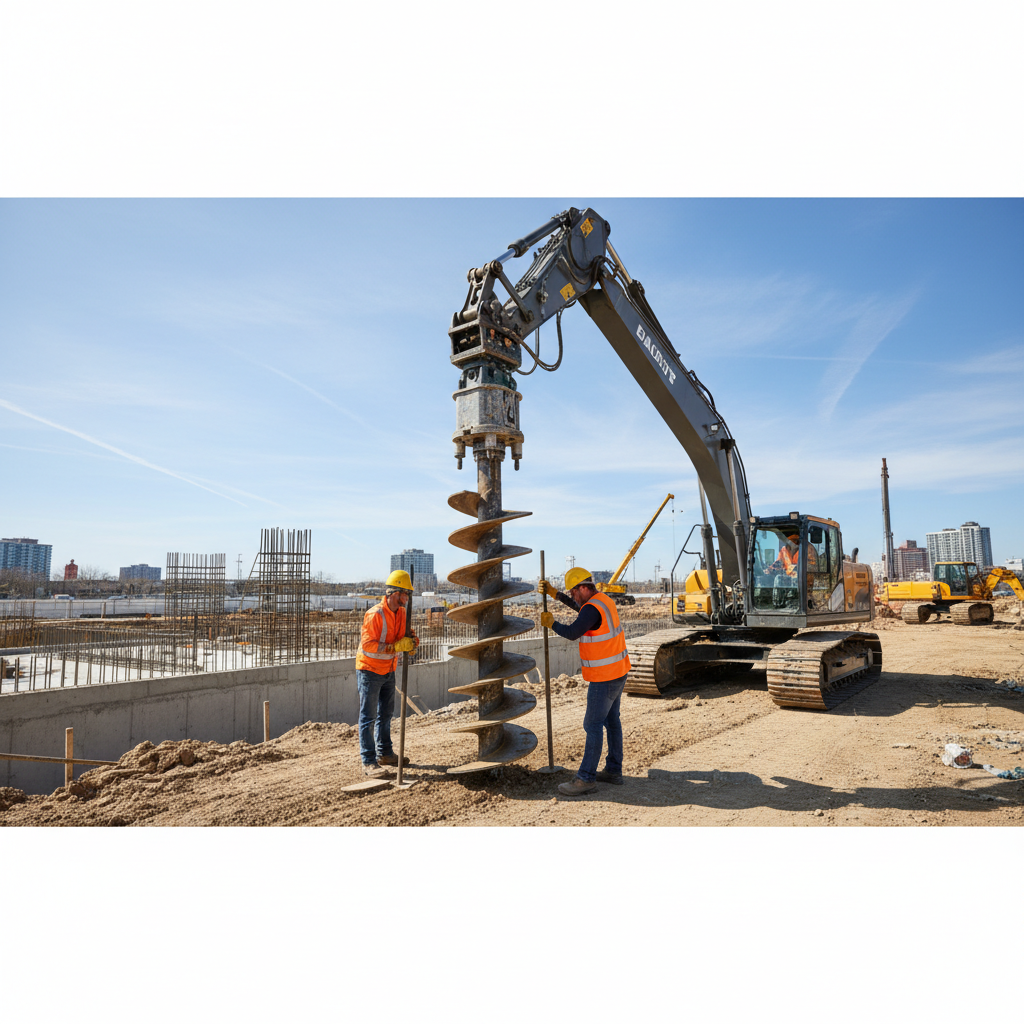
Beyond the Surface: What Are Helical Piles Used For in Modern Construction and Engineering?
In the dynamic landscape of civil engineering and construction, where ground conditions can range from stable bedrock to challenging soft clays and expansive soils, reliable foundational support is paramount. Traditional deep foundations like driven piles or drilled shafts have long been staples, but modern challenges – including speed, environmental impact, and cost-effectiveness – often call for innovative alternatives. This is where helical piles emerge as a powerful, versatile solution, increasingly specified for projects across the spectrum.
At LVI Engineering, we leverage the precision and reliability of helical piles to tackle some of the Bay Area's most demanding construction and remediation challenges. Understanding their diverse applications is key to appreciating their value in contemporary engineering.
The Ingenuity of Helical Piles: A Brief Overview
Before diving into their applications, it's essential to grasp what helical piles are. Often referred to as screw piles or helical piers, these are deep foundation elements consisting of a central steel shaft with one or more helical bearing plates welded to it. They are installed by screwing them into the ground using specialized hydraulic torque motors, much like a wood screw into timber. This rotational installation method minimizes soil disturbance and vibration, immediately transferring the structural load to competent bearing strata.
The engineering brilliance of helical piles lies in their ability to achieve significant load capacities – both compressive and tensile – almost instantly upon installation. The helices act as earth anchors, providing resistance to downward (compressive) forces and upward (uplift or tensile) forces, while the shaft resists lateral loads. This makes them exceptionally versatile.
Primary Applications: Where Helical Piles Excel
Helical piles are not a niche solution; their utility spans a broad range of scenarios in both new construction and existing structure remediation.
1. Foundation Support for New Construction
One of the most common and impactful uses of helical piles is providing robust foundation support for new structures, especially in challenging soil conditions.
- Weak or Unstable Soils: In areas with soft clay, loose sand, peat, or organic fill, traditional shallow foundations can lead to excessive settlement. Helical piles can bypass these weak upper layers and transfer loads to deeper, more stable soil strata.
- Expansive Clays: Regions prone to expansive clay soils, which swell and shrink with changes in moisture content, can cause significant damage to foundations. Helical piles can be designed to resist these expansive forces, anchoring the structure below the zone of seasonal moisture variation.
- High Water Tables: For projects situated in areas with high groundwater levels, conventional deep foundations might require extensive dewatering or specialized techniques. Helical piles can often be installed with minimal water management.
- Limited Access Sites: Their compact installation equipment makes helical piles ideal for sites with restricted access, such as urban infill projects, mountainous terrain, or environmentally sensitive areas where larger drilling rigs are impractical.
LVI Engineering in Action: Consider a new custom home planned for a steep hillside in Marin County, where varied geology presents a challenge. LVI Engineering would employ helical piles to create a stable, deep foundation system, ensuring the home's long-term stability against potential soil movement. Similarly, for a new commercial building in an area with liquefaction potential, helical piles can provide the necessary deep-seated support.
2. Foundation Underpinning and Repair
When existing foundations settle, crack, or show signs of distress due to shifting soils, erosion, or inadequate initial design, helical piles offer an effective and minimally disruptive solution for underpinning and repair.
- Stabilizing Settling Structures: Helical piles are screwed into the ground adjacent to the failing foundation, then brackets are attached to the foundation, and the structure is jacked up and secured to the piles. This process can halt further settlement and, in many cases, lift the structure back to its original elevation.
- Cracked Walls and Floors: These are often symptoms of foundation movement. By stabilizing the foundation with helical piles, further cracking can be prevented, and existing damage can be repaired with confidence.
LVI Engineering in Action: A Bay Area residence experiencing significant foundation cracks and uneven floors due to shifting soils—a common issue in the region—can be efficiently stabilized. LVI's team uses helical piles to underpin the distressed sections, providing immediate and permanent support. This approach often proves to be a more cost-effective and less invasive alternative to complete foundation replacement. For more insights into addressing such issues, explore our article on Foundation repair options for Bay Area homes.
3. Shoring and Earth Retention Systems
Helical piles are integral components in temporary and permanent earth retention systems, providing crucial lateral support for excavations and slopes.
- Tie-Back Anchors: In conjunction with lagging, sheet piling, or soldier piles, helical piles serve as effective tie-back anchors. They are installed at an angle into the soil behind an excavation wall, resisting the lateral earth pressures that would otherwise cause the wall to fail.
- Retaining Wall Stabilization: Existing retaining walls that are leaning or failing can be reinforced and stabilized using helical piles as anchors, preventing further movement.
- Slope Stabilization: In areas prone to landslides or soil erosion, helical piles can be used to anchor meshes, geogrids, or shotcrete to stabilize slopes.
LVI Engineering in Action: When LVI undertakes a deep excavation for a new underground parking garage or basement in a confined urban setting, temporary shoring is critical. Helical piles are frequently deployed as rapidly installed, high-capacity tie-backs, ensuring the stability of the excavation walls and the safety of adjacent structures. To learn more about when such measures are needed, see our discussion on When is temporary shoring needed in construction?.
4. Support for Specialty Structures
Beyond traditional building foundations, helical piles offer versatile support for a myriad of specialized structures where quick installation, minimal environmental impact, or specific load requirements are critical.
- Communication Towers and Utility Poles: Their ability to resist uplift forces makes them ideal anchors for guyed towers and self-supporting poles.
- Solar Panel Arrays: Helical piles provide a cost-effective, easily installed, and relocatable foundation for large-scale solar farms, especially on uneven terrain.
- Bridges and Boardwalks: For pedestrian bridges, boardwalks, or smaller vehicular bridges, particularly in environmentally sensitive wetlands or waterways, helical piles offer minimal disturbance during installation.
- Signs, Fences, and Light Poles: For commercial signage, high-security fences, and street lighting, helical piles offer fast installation with immediate load capacity.
LVI Engineering in Action: Installing a new array of solar panels on an irregularly sloped site in Sonoma County presents a challenge for traditional concrete foundations. LVI utilizes helical piles to create individual, adjustable foundations for each panel, adapting to the terrain and ensuring efficient installation without extensive grading.
5. Utility Infrastructure Support
The rapid growth of cities and the continuous need to upgrade infrastructure mean that utility projects are always underway. Helical piles play a crucial role in these developments.
- Pipeline Anchoring: They can secure pipelines against uplift or movement in unstable soils or across challenging topography.
- Substation Foundations: Providing stable and quickly installed foundations for electrical substations or transformer pads.
- Underground Utility Vaults: Helical piles can support the base of large utility vaults, ensuring their stability and preventing settlement in areas with poor bearing capacity.
LVI Engineering in Action: For a complex project involving the installation of a new underground utility conduit system, LVI might use helical piles to anchor critical junction boxes or access vaults, especially if the ground is saturated or unstable. This ensures the integrity of the Process of underground utility installation and the longevity of the infrastructure.
Key Advantages Driving Their Widespread Use
The growing adoption of helical piles is not just about their versatility; it's also about the inherent advantages they offer:
- Rapid Installation: They can be installed quickly with relatively small equipment, significantly reducing project timelines.
- Minimal Soil Disturbance: The screwing action displaces soil rather than removing it, leading to less spoils, less noise, and less vibration, which is ideal for urban areas or sensitive environments.
- Immediate Load-Bearing Capacity: Unlike concrete, which requires curing time, helical piles can accept full design loads immediately after installation.
- Versatility in Soil Conditions: Effective in a wide range of soil types, from loose sands to cohesive clays and even some fill materials.
- Cost-Effectiveness: Often more economical than traditional deep foundations due to reduced labor, less concrete, no spoil removal, and faster project completion.
- Environmental Benefits: Reduced carbon footprint compared to concrete, and they are fully removable, making them suitable for temporary structures or renewable energy projects.
LVI Engineering: Your Partner for Helical Pile Solutions
At LVI Engineering, our expertise in heavy civil engineering and specialized construction means we deeply understand the nuances of ground conditions and structural demands. We view helical piles not just as a product, but as a precision-engineered solution tailored to the unique challenges of each project. Our skilled team is adept at designing and installing helical pile systems that deliver superior performance, safety, and efficiency.
Whether you're planning a new build, need to stabilize an existing structure, or require robust shoring for an excavation, LVI Engineering offers the confidence and expertise to integrate helical pile technology seamlessly into your project. We pride ourselves on delivering solutions that are not only structurally sound but also align with the highest standards of safety and sustainability.
Ready to explore how helical piles can benefit your next project? Contact LVI Engineering today for a consultation and discover the unparalleled advantages these innovative foundations can offer.